Sunday, 3 February 2013

The evolutionary implausability of outlandish alien cognition

Contemporary arguments for (and against) the extended mind hypothesis (eg. Sprevak 2009) regularly invoke hypothetical aliens with outlandish forms of internal cognition. Sprevak asks us to imagine an alien that stores memories "as a series of ink-marks" (ibid: 9). This is meant to be functionally equivalent to the case where someone 'stores' their memories in an external diary. The point is that, in order to preserve multiple realisability and the Martian intuition, we are forced to accept that both the alien and the diary-user constitute cognitive systems, with the only difference being that the latter extends beyond the biological brain.

Baby Martian?

In another example, this time intended as a reduction ad absurdum of functionalism and the extended mind, Sprevak proposes an alien with an innate, internal cognitive sub-system that calculates the exact date of the Mayan calendar (ibid: 21). Again, his point is that there seems to be no functional difference between this sub-system and the one that he claims to have installed on his office computer1. Ergo, his extended mind includes this implicit knowledge of the Mayan calendar.

Ignoring for the moment any questions about the extended mind per se, we should question the plausibility of these kinds of aliens. In each case, but especially the second, it seems that our aliens would possess remarkably over-specialised brains. The ink-jet memory system seems cumbersome, and the Mayan calender calculator is an extremely niche-interest device, one that would probably never see any use. In both cases it is difficult to imagine how or why such a cognitive architecture would have evolved.

This doesn't constitute a counter-argument, as regardless of any evolutionary implausibility Sprevak's aliens serve their rhetorical purpose. However it's interesting to note that much of Clark's own use of the extended mind is intended to highlight the way in which human brains off-load these kinds of specialised skills on to the environment (see his 2003), meaning that we are precisely the kind of generalists that these aliens aren't. Perhaps it's important not to get too caught up with outlandish aliens when we consider the extended mind, and return to the much more homely (and relevant!) examples which it was originally intended for.


1. I have a meeting with him in his office tomorrow, so I'll try and check if is true...

References
  • Clark, A. 2003. Natural Born Cyborgs. Oxford: OUP.
  • Sprevak, M. 2009. "Extended cognition and functionalism." The Journal of Philosophy 106: 503-527. Available at (and references to) http://dl.dropbox.com/u/578710/homepage/Sprevak---Extended%20Cognition.pdf

Sunday, 27 January 2013

Meaning is User Relative

The dominant paradigm in cognitive science and philosophy of mind is the computational theory of mind (CTM). In its simplest form this theory states that the mind is essentially a device that takes inputs, performs a series of operations on them, and gives us an output. This process is known as a computation, and it is also what the digital computer sitting in front of you does. This is obviously no coincidence, as CTM and computer science have developed alongside one another since the 1950s.

Cue hackneyed image of 'mind as computer'

One major criticism of CTM is that it seems unable to account for meaning or semantic content. Any given computational process can be fully described in terms of the symbols that it operates on, the syntax, along with the rules that govern those operations. Whilst we do bestow meaning on to the symbols that our digital computers operate on, that meaning appears to be entirely relative to us, the user. It does not appear to be inherent to the symbols themselves, and in fact there is an infinite range of interpretations that can be given to any set of symbols (Pylysyhn 1986: 40). The worry is that if the mind is a computer, there would be no (inherent) semantic content to our thoughts.

This might turn out to be correct, which would mean that our mental states only mean anything relative to an observer. My mental representation of the blue sky outside of my window might be interpreted entirely differently by an alien scientist scanning my brain. To it, that mental state might simply represent a complex calculation, or a nostalgic yearning for the Sirius system. This, in fact, is a major plot point in The Hitchhiker's Guide to the Galaxy, where (SPOILER ALERT) the Earth turns out to be a giant supercomputer designed to calculate the Ultimate Question of Life, The Universe and Everything - the answer to which I will not reveal to you at this time.

This was the first attempt.

So what about my own interpretation of that mental state as representing a blue sky? That would have to be relative to me, as the 'user' of my own mental computer. What exactly this means, or if it even makes sense to say that I could be interpreting my own mental states, gets very complicated, very quickly. Aside from anything else, it raises questions about the nature of consciousness and the self, both of which are extremely contentious topics. Still, I see nothing wrong with saying that semantic content might be entirely user-relative, both in the case of the digital computer and that of the brain-bound one.


References
  • Adams, D. 1979. The Hithchhiker's Guide to the Galaxy. Pan Books.
  • Pylyshyn, Z. 1986. Computation and Cognition. MIT Press.

Wednesday, 26 December 2012

Animal Experiments and Laboratory Conditions: Some Initial Thoughts

I stumbled upon this paragraph on the website for the Medical Research Modernization Committee,

“the highly unnatural laboratory environment invariably stresses the animals, and stress affects the entire organism by altering pulse, blood pressure, hormone levels, immunological activities and a myriad of other functions. Indeed, many laboratory "discoveries" reflect mere laboratory artefact”

The article goes on to list and reference several examples where they believe artificial laboratory conditions aided in misleading researchers. For example, they take it that “unnaturally induced strokes in animals has repeatedly misled researchers”. I am in no position to evaluate such medical cases, and the authors of the article insufficiently explicate their examples for a lay person to draw reasonable conclusions. I hope at some point in the future to be able to comment more on this topic. However, their general point is one I have often considered albeit within the arena of animal behaviour and cognition.

An intense mouse.
 Can an artificial environment affect the physiology of an animal in such a way that it bears on medical and other research?  
The rough idea is that the artificial laboratory conditions may affect the results of experiments in important ways.

Scientists researching social cognition in chimpanzees, say, need to be aware that a laboratory environment may affect the animal’s normal psychology. For example, long time interaction with humans may make an animal more susceptible to certain human oriented behaviour, another factor which might affect generalisation from results. Experiments involving tasks in which chimps must assist humans need to take into account whether the subjects have prior history with experimenters. And indeed this is discussed and taken into account in many good experiments.

There is nothing necessarily wrong with experiments into social cognition in chimps within a laboratory setting. It would be foolish of us to disregard all laboratory based research. In most cases it is the only possible environment.

In one of my favourite studies, designed explicitly to compare human infants and young chimpanzee altruistic tendencies, human and infant chimps were tested on similar tasks (Warneken and Tomasello, 2006: 1). A human experimenter confronted a problem and needed assistance (e.g. reaching for an out-of-reach-marker, bumping into object that needs removal), with no reward given for help. Whilst the human infant intervened in more tasks than the chimp, the latter did reliably assist in the tasks involving reaching (incidentally also the task in which the children most reliably helped). These results, I believe, provide good support for a natural capacity, in both human and chimps, for non-selfish helping behaviour and tendencies beyond near kin, . It is hard to fault this study for taking place in laboratory settings.

In addition to possessing theory of mind, this guy can actually possess your mind.
Nevertheless the setting and history of all subjects must be taken into account as a potentially relevant variable. In short we need be aware of the possibility that a laboratory setting might affect the psychology and thus behaviour of animal subjects.


Warneken F, Hare B, Melis AP, Hanus D, Tomasello M (2007) Spontaneous Altruism by Chimpanzees and Young Children. PLoS Biol 5(7): e184. doi:10.1371/journal.pbio.0050184

Friday, 21 December 2012

Gilbert Ryle's Concept of Mind

I'd call this a book review, but I haven't finished the book yet. I am enjoying it though, so I thought I'd write a few words about some of the more relevant themes.

Just chilling, no doubt reading some Wittgenstein

As I mentioned last time, it was Gilbert Ryle who coined the term "ghost in the machine" to refer to the disembodied mind that cognitive science seems intuitively drawn towards. The Concept of Mind is to a large extent aimed at dispelling this intuition, but along the way it also touches upon a number of other fascinating topics. Below is a list of ideas that Ryle either introduces, expands upon, or pre-empts:
  • "Knowing How and Knowing That": This is the title of a whole chapter, wherein he draws a conceptual distinction between the two kinds of knowing. In brief, the first is the skilful execution of an action, the second the reliable recollection of a fact. The "intellectualist legend", according to Ryle, makes the former subordinate to the latter, in that all activities are reduced to the knowledge of certain rules (32). That this reduction is false is fundamental to his broader point - there is no isolated realm of the mental, and all cognitive activity must be expressed through action (or at least the potential for action).
  • Embodied cognition and the extended mind: In the same chapter, he devotes a few pages to the common notion that thinking is done "in the head" (36-40). This notion, he argues, is no more than a linguistic artefact, stemming from the way we experience sights and sounds. Unlike tactile sensations, sights and sounds occur at some distance from our body, and so when we imagine or remember them, it makes sense to highlight this distinction by saying that they occur 'in the head'. By extension thought, which Ryle conceives of as internalised speech,1 is also said to occur 'in the head'. However this idiomatic phrase is just metaphorical, and there is no reason that thinking should (or could) occur exclusively in the head.
  • "The Will": Another chapter, this time de-constructing our understanding of volition and action. Suffice to say, Ryle thinks we've got ourselves into a terrible mess, in particular in supposing that to do something voluntarily requires some additional para-causal spark. Rather, to describe an action as voluntary is simply to say something about the manner in which, and circumstances under, it is performed. Free will, under this reading, is something to do with the kind of causal mechanism involved, rather than anything 'spooky' or non-physical.2 Personally I've never found this kind of account particularly convincing, but it is nonetheless influential to this day.
  • Higher-order thought as a theory of consciousness: Although he never explicitly puts it this way, there is a passage where Ryle describes how some "traditional accounts" claim that what is essential for consciousness is the "contemplation or inspection" of the thought process that one is conscious of (131). This is very similar to contemporary 'higher-order' theories of consciousness (see Carruthers 2011). Ryle doesn't exactly approve, dismissing such theories as "misdescribing" what is involved in "taking heed" of one's actions or thoughts.
So there you have it: Gilbert Ryle, largely forgotten but by no means irrelevant. As you may have noticed, a lot of his ideas influenced Daniel Dennett, which isn't surprising, seeing as Dennett studied under Ryle at Oxford.
1. This, perhaps, is one source of Dennett's fable about the origins of consciousness (1991).
2. Again, this is reminiscent of Dennett (2003).
 
References
  • Carruthers, P. "Higher-order theories of consciousness." Stanford Encyclopedia of Philosophy. Retrieved from http://plato.stanford.edu/archives/fall2011/entries/consciousness-higher [21.12.2012]
  • Dennett, D. 1991. Consciousness Explained. Little, Brown & Company.   
  • Dennett, D. 2003. Freedom Evolved. Little, Brown & Company.   
  • Ryle, G. 1949. The Concept of Mind. Hutchinson. 

Saturday, 24 November 2012

A spectre is haunting cognitive science...

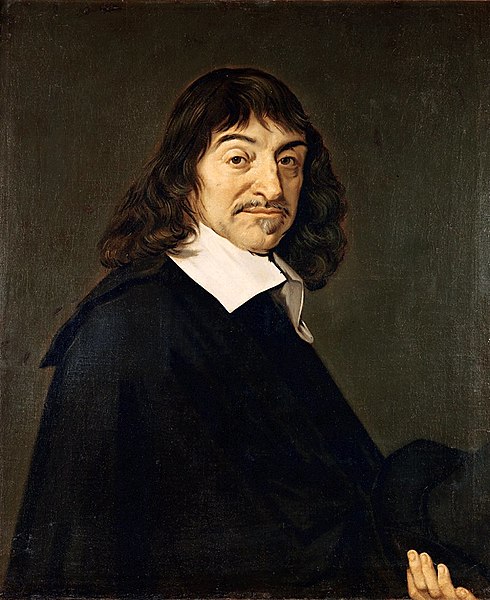
...the spectre of Cartesian materialism. If there's been one consistent theme running through my studies over the last two and a half month, its this. But what is Cartesian materialism, and why is it haunting cognitive science?

A few obligatory words about the man himself before we go any further. RenƩ Descartes was a 17th century philosopher and mathematician, probably most famous for the now-infamous words "cogito, ergo sum" - "I think, therefore I am". He also invented the Cartesian coordinate system, which most of you will have been taught, even if you don't know it (it's the classic x-axis, y-axis thing). In modern analytic philosophy he enjoys a dubious status as both the inspiration and the target of many key arguments. It is a great irony that a tradition which owes so much to Descartes also routinely indoctrinates undergraduates against him.

He did most of his philosophising from the comfort of his bed.

Not that this is necessarily a bad thing. Many of Descartes' arguments are terrible, but the intuitions they appeal to remain strong, and his influence (the "spectre" of my title) can be felt throughout cognitive science and analytic philosophy of mind. Foremost amongst these is the intuition that 'mind' and 'body' must refer to two distinctly separate kinds of things. Descartes thought that this meant they must be composed of two separate substances, one physical and extended, the other insubstantial and non-extended. His cogito argument refers to this distinction - my mind, being a thinking thing, seems to exist independently of (and prior to) any physical world.

Empirical philosophy of mind (and thus cognitive science) tends to reject this dualism. Most philosophers of cognitive science (including myself) are physicalists, committed to there being only one kind of substance in the world. Thus the mind must be made out of the same kind of stuff as the body. Despite this commitment, there remains a tendency to conceive of the mind as something special, somehow autonomous from its physical instantiation. This attitude is sometimes called 'property dualism', 'non-reductive physicalism' , or, by its opponents, 'Cartesian materialism'.

Classical cognitive science, which dates back to around the middle of the last century, was (and still is) enamoured with the idea that the mind is essentially a computer program. As such it made sense to think of the mind as something distinct from the brain, a kind of "software" running on biological "hardware". This intuition is still strong today, particularly amongst those wanting to give an account of mental representation ("pictures" in the mind), or of the apparently inferential structure of cognition. Traditional functionalist accounts of cognition also tend towards a form of Cartesian materialism, as the multiple realisability requirement means that strict type identity between the mind and the brain is not possible. Whilst in many cases the mind (classically speaking) simply is the brain, it's conceivable that it might take some other form, and so the two are not strictly identical. 

However, recent (and some not-so-recent) work in embodied cognition argues that the physical body might be more important than classical cognitive science assumes. Examples include John Searle's suggestion that some quality of the neurobiological brain might be essential for consciousness (1980: 78), various enactive approaches to perception (championed by Alva Noƫ), and the dynamical systems approach that argues that cognition is a continuous process involving the brain, body, and environment. Whilst these approaches differ in many respects, they all agree that the mind cannot be conceived of as distinct or autonomous from the body.

Whilst Daniel Dennett takes an essentially computational and functionalist approach to cognition, he has also warned against the risks of Cartesian materialism - in fact, he invented the term. In Consciousness Explained (1991), he argues that many of our confusions about both consciousness and the self stem from Descartes, and that it is essential that we stop thinking about the mind as a single entity located at some discrete location within the brain. His mentor Gilbert Ryle made a similar point in The Concept of Mind, writing about the "dogma of the ghost in the machine" (1949: 17), the disembodied Cartesian mind that somehow controls the body.

A final Cartesian oddity that I have come across recently is found in the phenomenological work of Jean-Paul Sarte. Despite explicitly rejecting the Cartesian concept of the self, he emphasises a distinction between the "being-in-itself" and the "being-for-itself". The former is something like a physical body, and is all the "being" that a chair or a rock can possess, whilst the latter is what makes us special, the uniquely first-person point of view that we seem to enjoy. IN making this dichotomy he has been accused of resurrecting a kind of Cartesian dualism, in contrast with another famous phenomenologist, Merleau-Ponty, who saw the self as inherently bound up in its relations the the world.

So there you have it, a whistle-stop tour of Cartesian materialism. I'm aware that I've skimmed over a lot of ideas very quickly here, but hopefully it's enough to illustrate the way in which Descartes is still very much exerting an influence, for better or for worse, on contemporary philosophy of mind.

  • Boden, M. 1990. The Philosophy of Artifial Intelligence. Oxford: OUP.
  • Dennett, D. 1991. Consciousness Explained. Little, Brown and Company. 
  • Searle, J. 1980. “Minds, Brains, and Programs.” Reprinted in Boden 1990: 67-88.
Wednesday, 14 November 2012

The "theory" in theory-theory isn't really a theory

First a little bit of background for anyone who isn't familiar with the theory of mind debate.The question is how we are able to understand the mental states of other people, and whether, broadly speaking, we perceive them directly or rely on some kind of inferential process. There's also a subsidiary debate about whether that inferential process might involve "simulating" the mental states of others within our own mind, but I'm not going to discuss that here. What I want to focus on is the dialectic between Shaun Gallagher (probably the strongest proponent of the direct perception camp) and theory-theory, which is the theory that we rely on a theory in order to understand other minds.

As you may have noticed, philosophers are not particularly imaginative when it comes to naming their theories. Theory-theory is really quite simple, though. It basically says that we possess a theoretical model that we use to interpret other people's actions, allowing us to attribute folk psychological states such as pain and belief to other people, despite having no access to their mental life. So when I see you crying, I am able to understand that you are sad by checking my perceptual evidence ("crying") against my theory of mind ("crying = sad").

This infant, lacking a fully developed theory of mind, is unaware that she is sad.

In contrast, Gallagher appeals to phenomenological evidence to argue that we are actually able to perceive to the states of other minds directly, without any appeal to a theory. I was initially sceptical of this position, not because of the evidence that it appeals to (it certainly feels like I perceive your sadness directly), but rather because it seems to lack any account of the actual process that goes on when we perceive mental states. As soon as we try to give an account of this process, we seem to reintroduce a (limited) kind of theory, one that may not be explicit but nonetheless underlies so called "direct" perception.

My undergraduate supervisor Suilin Lavelle makes a similar point in her paper "Theory-theory and the Direct Perception of Mental States" (2012), and I won't deny that her view has undoubtedly influenced my own. However I do feel that Gallagher is right to deny that we explicitly theorise about other minds, at least under usual circumstances. It's still possible to reconcile his position with theory-theory, but not without putting pressure on our common-sense understanding of what constitutes a "theory".

A quick aside: I am focusing here on what is sometimes called "innate" or "modular" theory-theory. This is the theory that we are born with a theoretical understanding of other minds, one that develops in predictable ways as we pass through infancy. It can be contrasted with "scientific" theory-theory, which says that as infants we form a theory about other minds, based on our inter-personal experiences. I find the former theory a lot more plausible, for reasons that I won't go into here.

Back to direct perception. Lavelle argues that theoretical entities can be thought of as direct objects of our perception, provided that we are equipped with the correct theory (Lavelle 2012: 227-9). If mental states are like this, then theory-theory can claim that when I infer from your crying that you are sad, I am in a sense "directly perceiving" your sadness. This might not be enough to satisfy Gallagher, but it is certainly beginning to look a lot more like the kind of intersubjective experience of mental states that he advocates. In fact, I'm inclined to say that the dispute, from this angle, is little more than an aesthetic one. Gallagher doesn't want to call whatever underlies this process a "theory", whilst Lavelle (and others) do.

So why should we think that the tacit processes underlying our perception of mental states are theoretical? Theory-theorists tend to fall back on experimental evidence at this point, arguing that the kinds of systematic errors we find infants performing when they attribute mental states suggest that a certain kind of theoretical structure is at work. They also claim that in order to support inferential reasoning, our understanding of other minds must come in the form of a theory, with propositions and syntax. On the other hand, if this theory is relatively innate and non-explicit, it's unclear to what extent it could really be a "theory". Perhaps it is best described as a theory, just as we might want to say that I have a "theory of depth" that allows me to perceive a far-away cow as being normal sized, despite it appearing to be small. This doesn't mean that I literally understand depth theoretically though.

I think some theory-theorists would actually agree with this interpretation, which is why I said that the dispute is mostly aesthetic. Some people are happy to call a tacit "theory" a theory, others aren't, but this doesn't mean that they actually disagree about anything significant - which sadly is often the case in philosophy. There may be something more significant and fundamental resting on the distinction between a theory and a non-theoretical perceptual process, but I'll happily admit that I'm not quite seeing it yet.

Some credit is due to everyone in the Cognition, Culture, and Context seminar class at Edinburgh University, with whom I discussed this yesterday. Any mistakes that I've made are my own.


Thursday, 8 November 2012

Abandoning the Essential, Embracing the Vague

-->
Ideas of the self continue to bewilder. Philosophy, so often disengaged with the real word, becomes starkly relevant when we consider, for example, the daily tribulations of dementia sufferers and carers, and their very real concerns about identity.

Julian Baggini's The Ego Trick contains a very nice summary of one apparent problem facing notions of the self, 

“Therein lies a paradox of any view of the self which puts psychological continuity at its core. On such views,radical discontinuity destroys it. But if there is no hardcore of self, and it is always in flux, then as long as the change is gradual, two very different stages in a person's life can legitimately be seen as stages in the life of one self.” (pg.56)

To paraphrase wikipedia, a paradox is a statement that leads to a contradiction or a situation which defies logic or reason. Baggini rightly highlights the importance of the “paradox” which arises from a common notion of the self. However, I think the solution is to realise it is no true paradox as such. There is in fact nothing contradictory about holding that the self survives across long term change, whilst also holding that it cannot survive certain rapid and/or sufficient kinds of change. This is is possible when we abandon essentialist criteria, the idea that there is a fundamental core or “pearl” of the self to be discovered, rather than a composite entity arising from memory and cognition. Instead, the self becomes vague; a complex phenomena resulting from our biologically circumstantial cognitive apparatus and our relationship with others. Whereas the essentialist view leads us to believe there must be definite conditions when the self remains the same or not, the alternative frees us to the see the self as far more confusing.

In everyday life it's always clear that the person we saw yesterday is still the same person today. And yet it is not hard to conjure situations where it seems clear they are not. In between there are fuzzy grey areas, fuzzy and grey not because we don't understand the truth about the self not because we lack the understanding about the essential nature of the self, but because there is no truth about the matter, there is no essential nature of the self.

Traditional views of an essential self include the idea of the soul, prevalent at least in West, and enduring.

Much of what determines our feelings of a continuous, pervasive self in ourselves and others, must surely be the result of useful adaption. Even species with a simple social life have the need to track and distinguish other particular members as continuous entities, despite physical and behavioural changes over time. Within astonishingly elaborate human society this basic remains true, but is compounded with myriad complexities that come with higher awareness and profound relationships. This complexity creates uncertainty and confusion, strengthened by our own intuitions that there must be an essential part of ourselves which, once understood, will enlighten us to the mysteries of the self. Our evolved psychology may well predispose us to viewing the person as having an essential core. But by clinging to this idea within philosophy we become confused. This intuition may well be a useful adaption, but it does not follow that it reveals anything metaphysically true.

The Sorities Paradox. Abandoning essentialist criteria and embracing vagueness may cast light on apparent contradictions.


Of course there is nothing wrong with calling the apparent discontinuity of conclusions about the self a paradox, or to be continually puzzled by it. That is an inevitable part of the nebulous self and the human condition. Anyone who has experienced the development of dementia within a loved one (an issue Baggini discusses at length) will understand the conflicted feelings one can feel about the identity of the sufferer.

Is the dementia sufferer the same person they once were? Within the delicate scenarios this question may be raised there may be well founded and pragmatic reasons for assuming one or the other, the reasonableness of which will be relative to the stage and context of the sufferer's illness. Sometimes it may be clear that our loved one is the same person they always were. Changed perhaps. But still them. Unfortunately it is not always so clear. Sometimes it will be hard to say. Every carer has a different perspective, seldom are any of them wrong. That is just the peculiar, sometimes painful nature of the self.

-->
Baggini, J (2011) The Ego Trick Granta Publications: London